
Childhood Cancer: Awareness, Early Detection & Hope
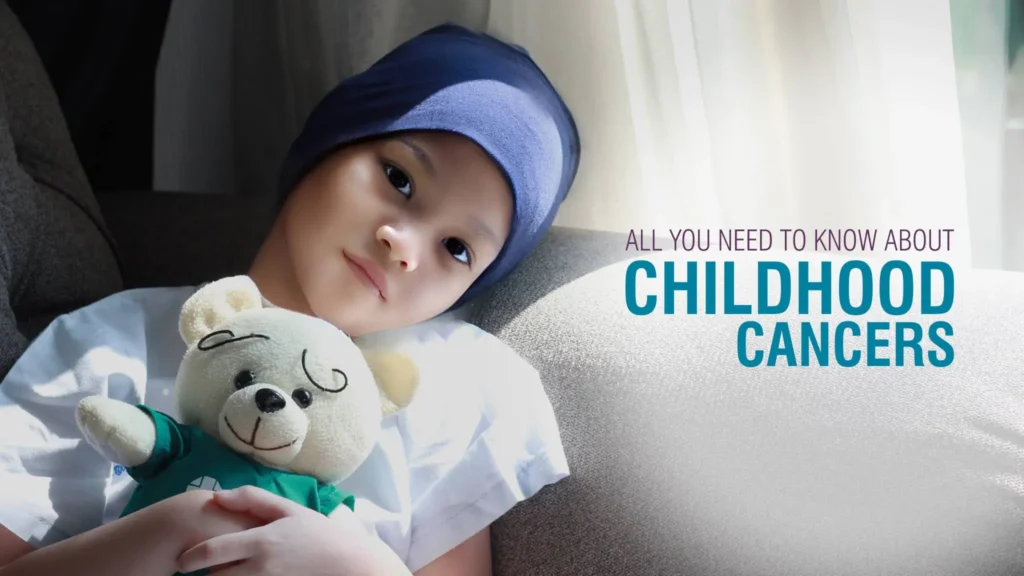
Cancer is often seen as a disease of adulthood, but sadly, it also affects children. Childhood cancer refers to cancers that develop in children and adolescents, usually before the age of 15. While rare compared to adult cancers, it is still a leading cause of disease-related death among children. Raising awareness, promoting early detection, and providing emotional support to families can make a huge difference.
What is Childhood Cancer?
Childhood cancer is not a single disease but a group of conditions where abnormal cells grow uncontrollably. Unlike adult cancers, childhood cancers are less linked to lifestyle or environmental factors and are often due to genetic changes or unknown causes.
The most common types include:
- Leukemia – cancer of the blood and bone marrow.
- Brain and spinal cord tumors – affecting the central nervous system.
- Neuroblastoma – usually starting in nerve cells of infants or young children.
- Wilms tumor – a kidney cancer found mostly in young children.
- Lymphomas – affecting the immune system.
- Bone cancers – such as osteosarcoma and Ewing sarcoma.
Signs and Symptoms
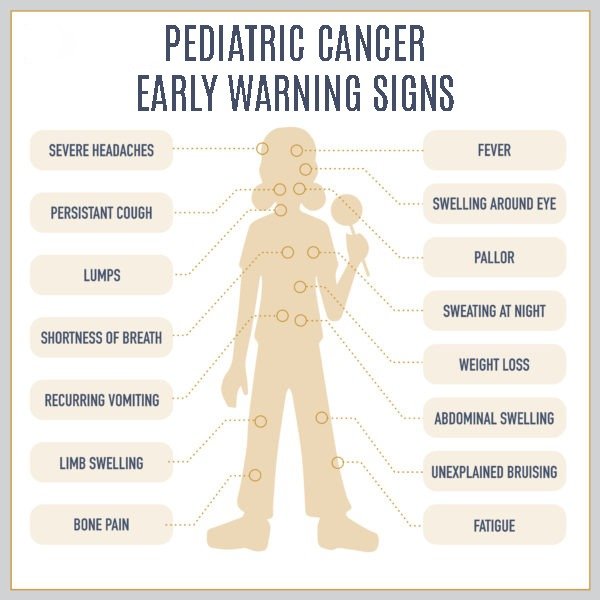
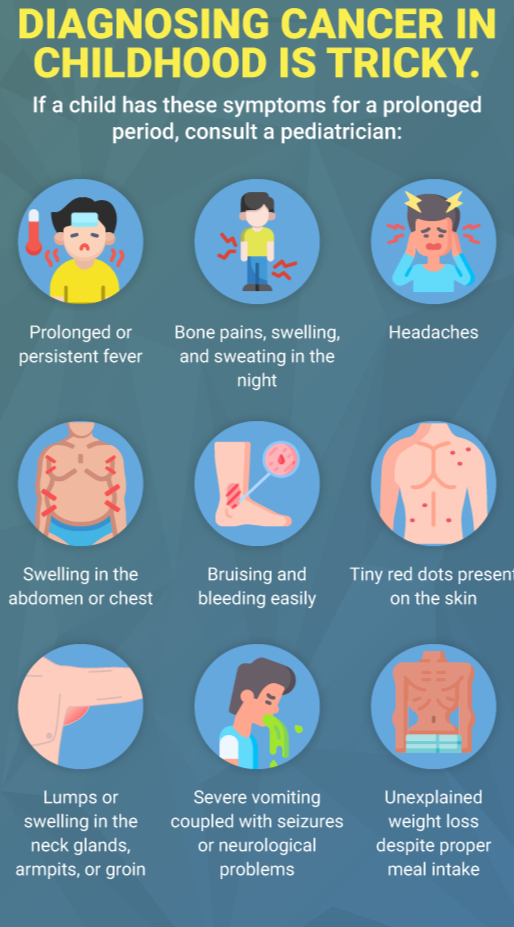
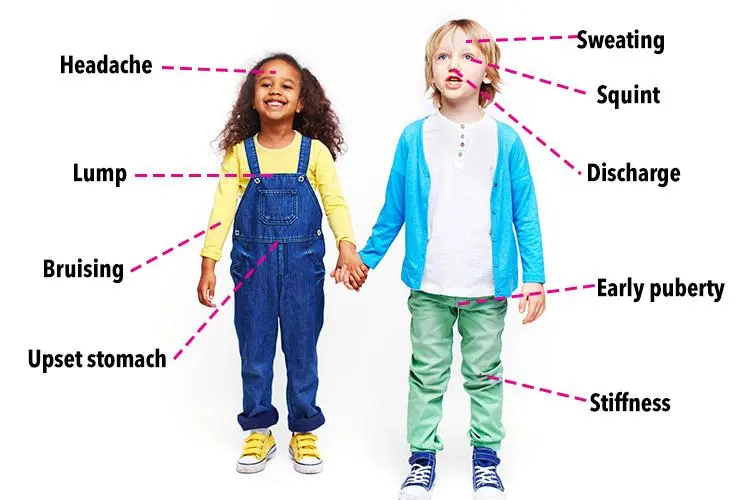
Childhood cancer symptoms can be subtle and often mistaken for common illnesses. Parents and caregivers should be aware of warning signs such as:
- Persistent fevers, night sweats, or frequent infections.
- Unexplained weight loss or loss of appetite.
- Unusual lumps or swelling.
- Frequent headaches, dizziness, or vision changes.
- Persistent fatigue, paleness, or easy bruising.
- Bone or joint pain without injury.
If these symptoms persist, medical evaluation is necessary.
Causes and Risk Factors
Unlike adults, children’s cancers are rarely caused by lifestyle factors. Risk factors may include:
- Genetic mutations or inherited conditions.
- Family history of certain cancers.
- Exposure to radiation or harmful chemicals (though rare in children).
- Often, the exact cause remains unknown.
Diagnosis
Doctors use several tests to diagnose childhood cancers, such as:
- Blood tests to check cell counts.
- Imaging tests (X-ray, CT, MRI, ultrasound).
- Biopsy to examine tissue.
- Bone marrow tests in suspected leukemia cases.
Treatment Options
Treatment for childhood cancer has advanced significantly, and many children go on to live long, healthy lives. Common treatments include:
- Chemotherapy – most widely used to kill cancer cells.
- Radiation therapy – targeted high-energy rays.
- Surgery – to remove tumors when possible.
- Immunotherapy – helping the body’s immune system fight cancer.
- Stem cell transplant – for certain blood cancers.
Treatment plans depend on cancer type, stage, and the child’s overall health.
Life After Treatment
Surviving cancer is a major victory, but children may face long-term side effects such as learning difficulties, growth issues, or organ problems. Regular follow-ups and supportive care are essential. Emotional support for both the child and family is equally important.
Hope and Prevention
While many childhood cancers cannot be prevented, early detection and proper treatment greatly improve survival rates. Today, with advanced medicine, nearly 80% of children diagnosed with cancer in high-income countries survive long-term.
Parents can help by:
- Seeking prompt medical attention for unusual symptoms.
- Maintaining regular pediatric check-ups.
- Supporting children emotionally during treatment and recovery.