
Understanding Bladder Cancer: Symptoms, Causes & Treatment
Bladder cancer is one of the most common cancers affecting the urinary system. It begins when abnormal cells in the bladder — the organ responsible for storing urine — start to grow uncontrollably. Early awareness, timely diagnosis, and proper treatment can significantly improve outcomes.
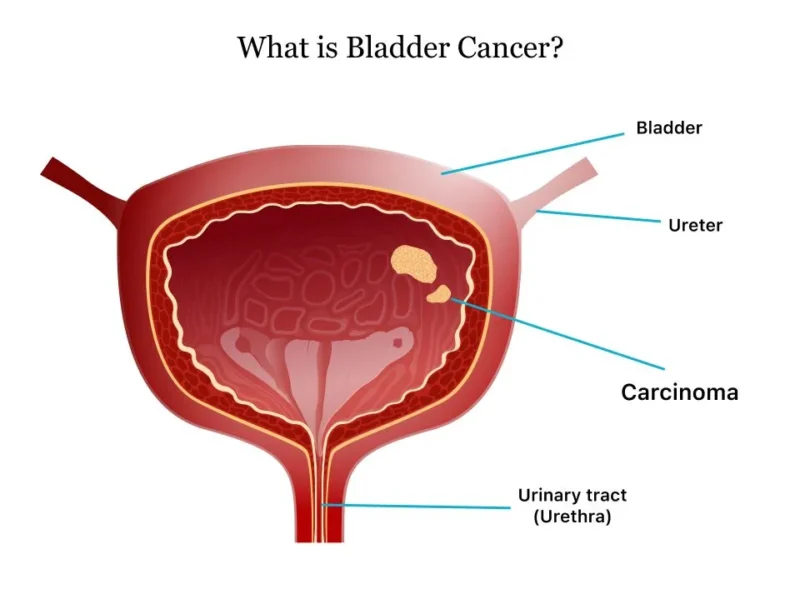
What is Bladder Cancer?
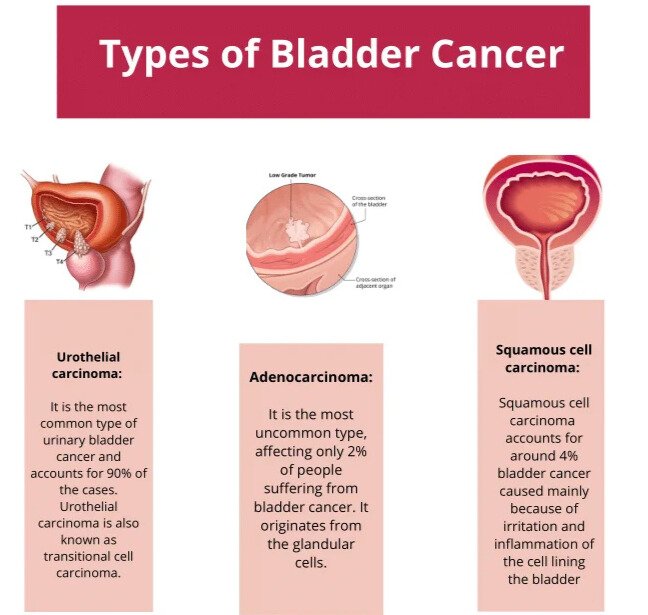
The bladder is a hollow, muscular organ in the lower abdomen that stores urine before it leaves the body. Bladder cancer develops when cells in the bladder lining grow abnormally and form tumors. The most common type is urothelial carcinoma, which originates in the bladder lining.
Common Symptoms
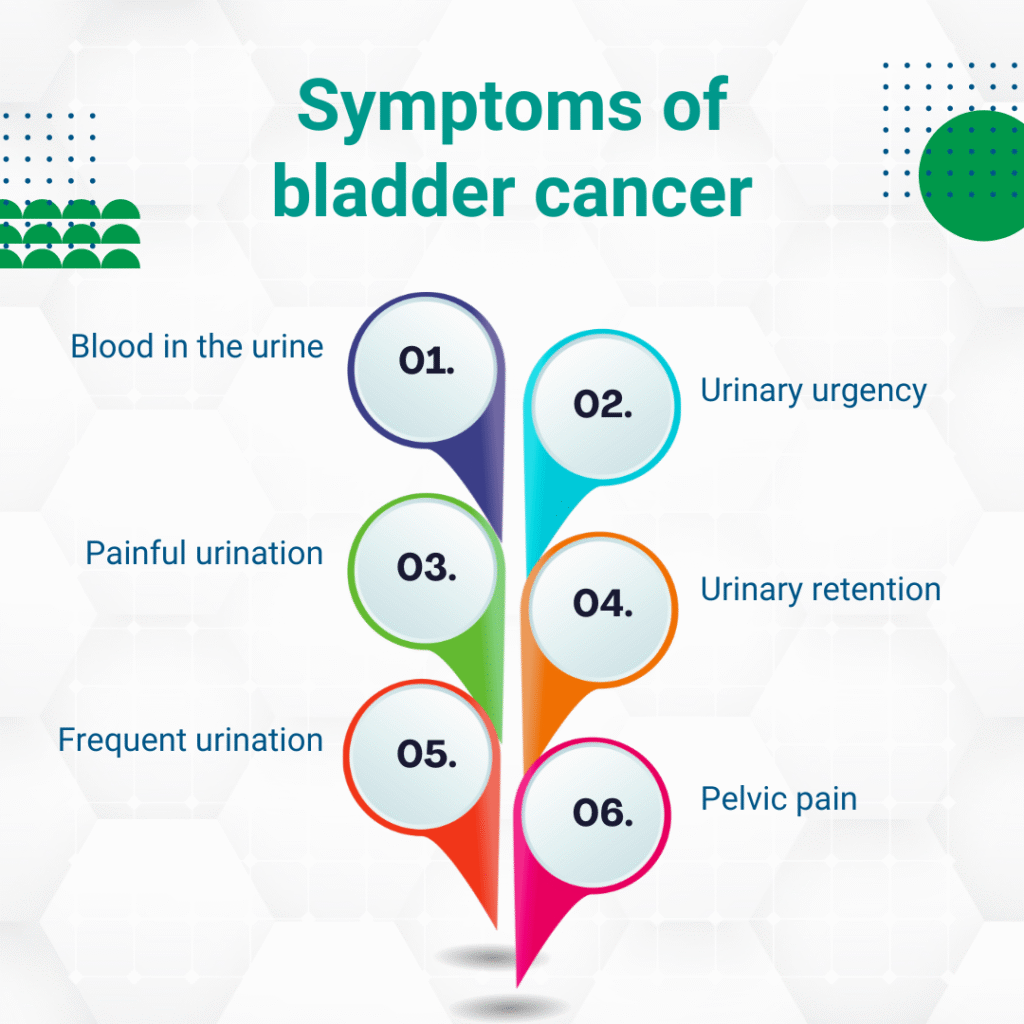
Bladder cancer often shows warning signs early. Some of the most common symptoms include:
- Blood in urine (hematuria) – often painless but noticeable.
- Frequent urination or feeling the urge to urinate without relief.
- Pain or burning sensation during urination.
- Pelvic or lower back pain in advanced stages.
It’s important to note that these symptoms may also be linked to urinary infections or other conditions, so medical consultation is essential.
Causes and Risk Factors
While the exact cause isn’t always clear, certain factors can increase the risk of bladder cancer:
- Smoking – tobacco chemicals pass into urine and affect the bladder lining.
- Exposure to industrial chemicals – such as dyes, rubber, and paint.
- Chronic bladder inflammation – due to repeated infections or catheter use.
- Age and gender – more common in people over 55 and in men.
- Family history or genetic predisposition.
Diagnosis
If bladder cancer is suspected, doctors may recommend:
- Urine tests to detect cancer cells.
- Cystoscopy (camera inserted into the bladder).
- Imaging tests such as CT scan, MRI, or ultrasound.
- Biopsy to confirm cancer type and stage.
Stages of Bladder Cancer
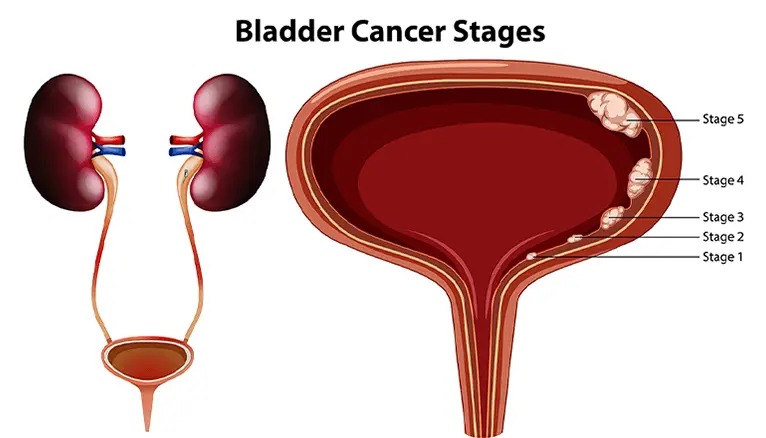
The severity of bladder cancer is classified into stages based on tumor size, depth, and spread:
- Stage 0 – confined to the bladder lining.
- Stage I – cancer has invaded the bladder wall.
- Stage II – deeper muscle involvement.
- Stage III – spread to nearby tissues.
- Stage IV – spread to lymph nodes or distant organs.
Treatment Options
Treatment depends on the stage and overall health of the patient. Common approaches include:
- Surgery – to remove cancerous tissue or, in advanced cases, the entire bladder.
- Chemotherapy – before or after surgery to shrink or kill cancer cells.
- Immunotherapy – boosting the body’s defense system to fight cancer.
- Radiation therapy – used when surgery is not an option.
Prevention & Healthy Lifestyle
While not all bladder cancers can be prevented, certain lifestyle choices help reduce risk:
- Quit smoking – the single most important step.
- Stay hydrated – drinking water helps flush toxins.
- Use protective measures at work – if exposed to harmful chemicals.
- Eat a balanced diet – rich in fruits and vegetables to boost immunity.