
Skin Cancer: Causes, Symptoms & Prevention
Skin cancer is one of the most common types of cancer worldwide. It develops when abnormal skin cells grow uncontrollably, often due to damage from ultraviolet (UV) radiation from the sun or tanning devices. While many cases are treatable when caught early, prevention and awareness remain the best protection.
Types of Skin Cancer
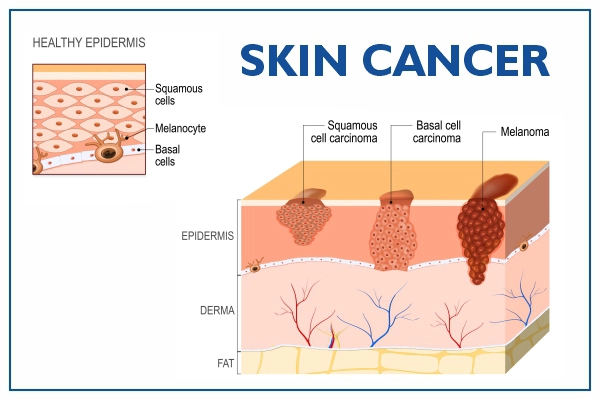
There are three main types of skin cancer:
- Basal Cell Carcinoma (BCC)
- The most common type.
- Appears as a pearly bump, flat scar-like lesion, or sore that doesn’t heal.
- Rarely spreads, but can cause damage if untreated.
- Squamous Cell Carcinoma (SCC)
- Usually appears as a firm, red nodule or a rough, scaly patch.
- Can spread to other areas if left untreated.
- Melanoma
- The most serious form.
- Develops in the pigment-producing cells (melanocytes).
- May start as a mole that changes in size, shape, or color.
- Can spread quickly and become life-threatening.
Symptoms and Causes
Warning Signs & Symptoms of Skin Cancer
The most common warning sign of skin cancer is a change on your skin — usually a new growth or a change in an existing mole or spot. Paying attention to these changes can help in detecting skin cancer early, when treatment is most effective.
Common Symptoms Include:
- New moles or existing moles that change in size, shape, or color, or begin to bleed.
- A pearly or waxy bump that appears on the face, ears, or neck.
- A flat, pink, red, or brown-colored patch or bump that slowly enlarges.
- Scar-like areas on the skin that feel firm and look shiny or pale.
- Sores that appear crusty, have a depression in the middle, or bleed often.
- A wound or sore that doesn’t heal — or one that heals but keeps coming back.
- A rough, scaly lesion that may itch, bleed, or become crusty over time.
Common Causes & Risk Factors
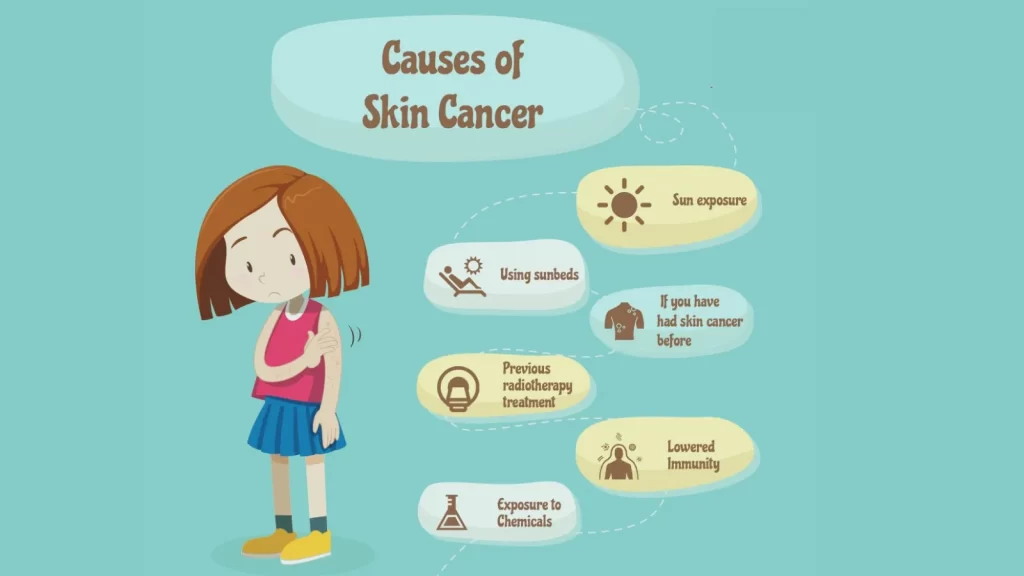
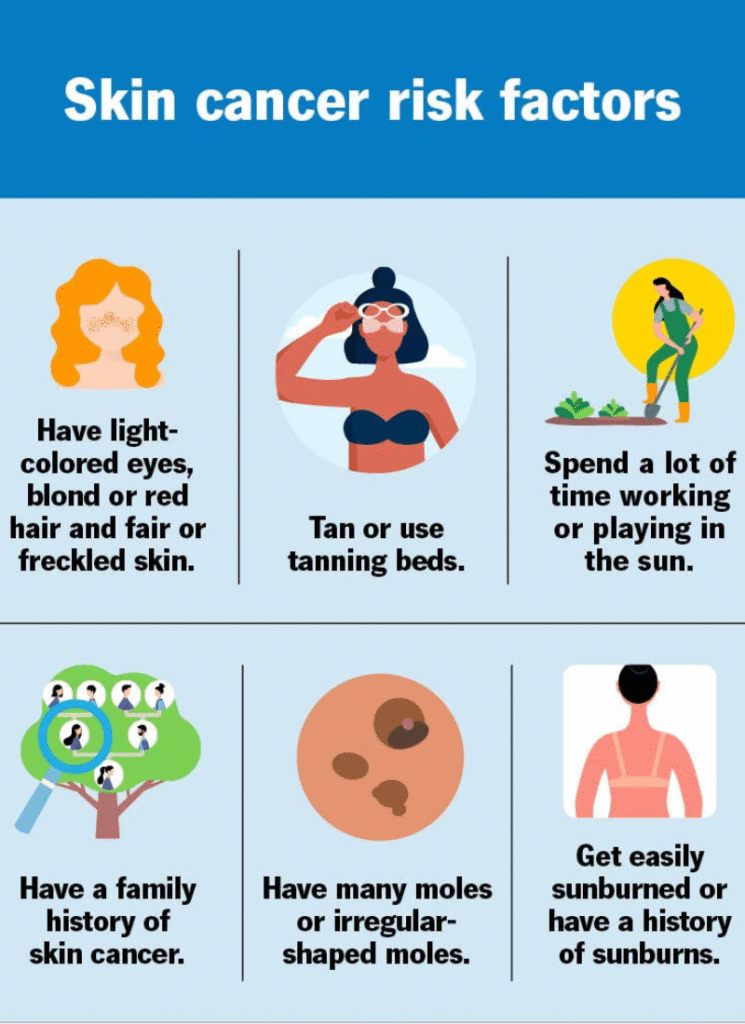
- Excessive sun exposure and tanning beds.
- Fair skin, light hair, and light eyes (though anyone can develop it).
- History of sunburns, especially during childhood.
- Family or personal history of skin cancer.
- Weak immune system.
Warning Signs to Watch For (ABCDE Rule for Moles)
- Asymmetry – one half doesn’t match the other.
- Border – irregular, ragged, or blurred edges.
- Color – uneven colors (brown, black, pink, red, white).
- Diameter – larger than 6mm (about the size of a pencil eraser).
- Evolving – changing in size, shape, or color.
Prevention Tips
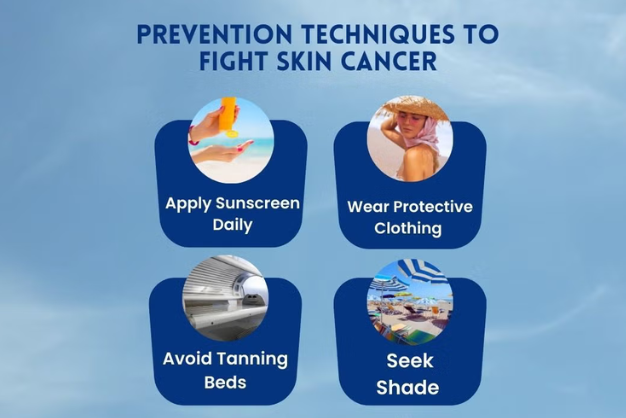
- Apply sunscreen (SPF 30 or higher) daily, even on cloudy days.
- Wear protective clothing, wide-brimmed hats, and sunglasses.
- Avoid tanning beds.
- Stay in the shade during peak sun hours (10 a.m. – 4 p.m.).
- Check your skin regularly for unusual spots or changes.
- Visit a dermatologist for annual skin checks.
Treatment Options
- Surgery to remove cancerous tissue (most common).
- Cryotherapy (freezing abnormal cells).
- Radiation or chemotherapy in advanced cases.
- Immunotherapy or targeted therapy for melanoma.
Final Thoughts
Skin cancer is preventable in many cases, and when detected early, it is highly treatable. Protecting your skin today can save you from serious health problems tomorrow. Stay sun-safe, stay aware, and consult a healthcare professional if you notice any unusual changes in your skin.