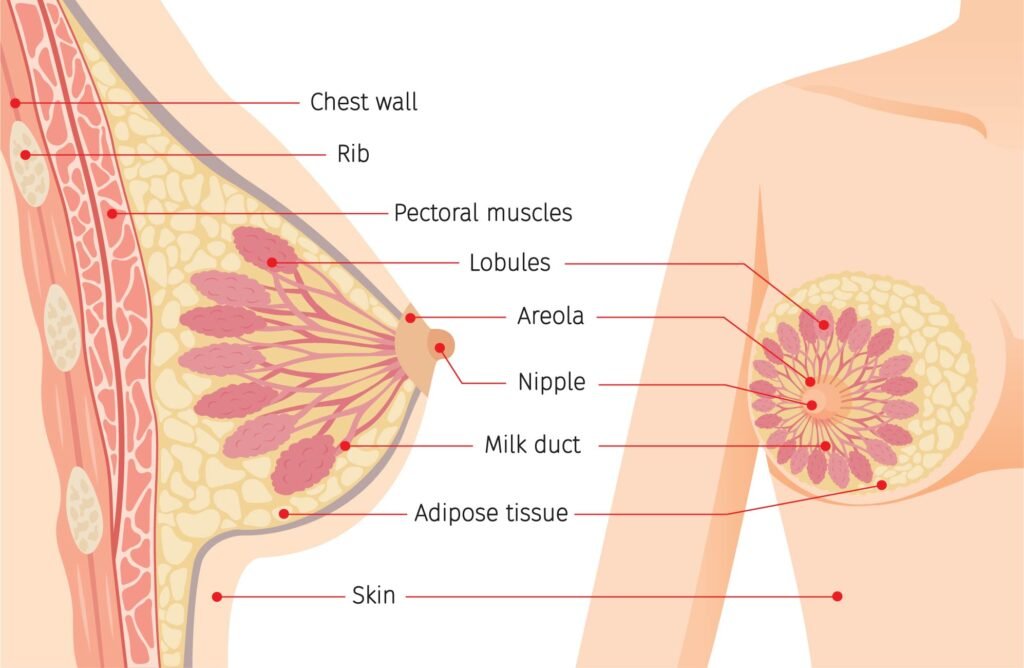
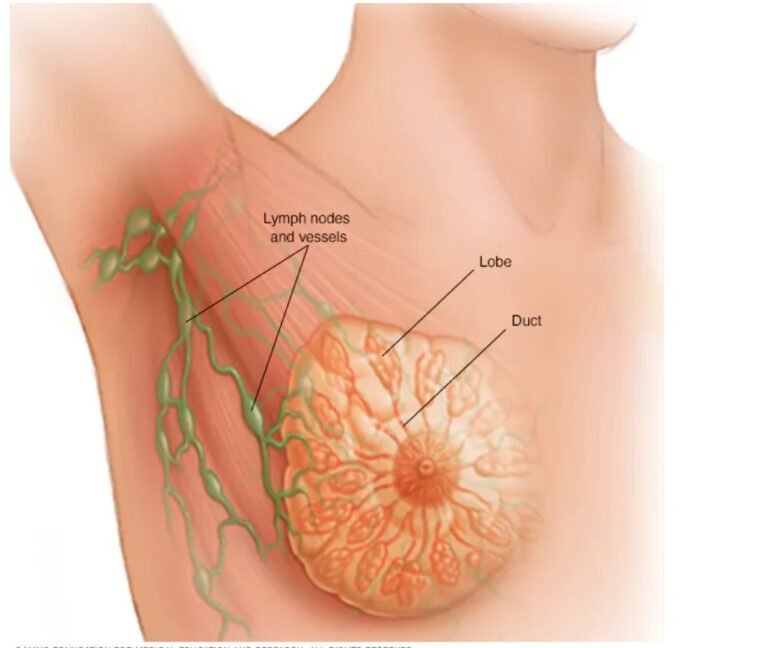
What is Breast Cancer?
Breast cancer is one of the most common cancers affecting women worldwide. It begins when normal breast cells mutate and grow uncontrollably, forming tumors. In many cases, these tumors are invasive, meaning they can spread beyond the breast to other parts of the body.
While breast cancer most often occurs in women over the age of 50, it can also affect younger women and, in rare cases, men.
Types of Breast Cancer
Healthcare providers classify breast cancer into types and subtypes to design treatments that are targeted and effective while minimizing side effects.
Common Types
- Invasive Ductal Carcinoma (IDC): The most common form, starting in the milk ducts and spreading into surrounding tissue.
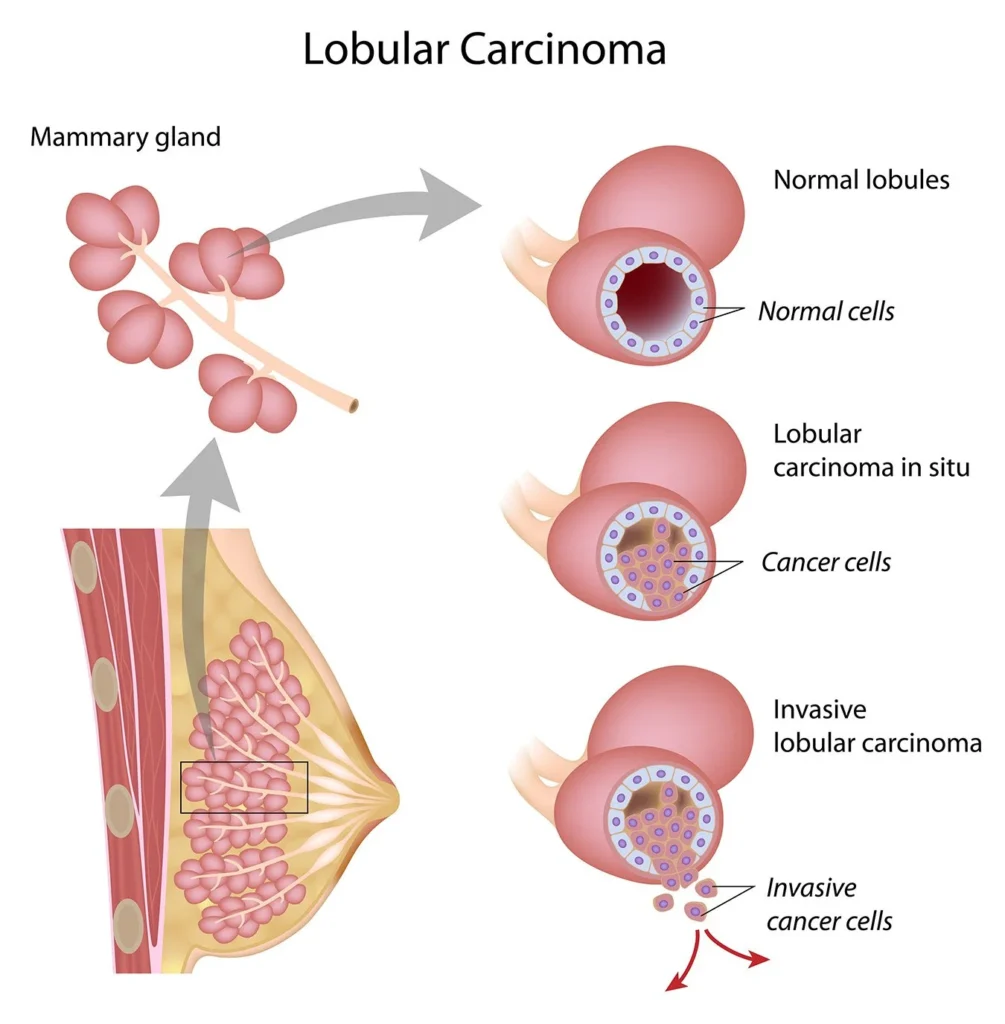
- Lobular Breast Cancer: Begins in the milk-producing glands (lobules).
- Ductal Carcinoma in Situ (DCIS): A non-invasive cancer that stays within the milk ducts.
Less Common Types
- Triple-Negative Breast Cancer (TNBC): An aggressive type that lacks common hormone receptors, making treatment more challenging.
- Inflammatory Breast Cancer (IBC): A rare, fast-growing cancer that causes swelling and redness.
- Paget’s Disease of the Breast: Affects the skin of the nipple and areola.
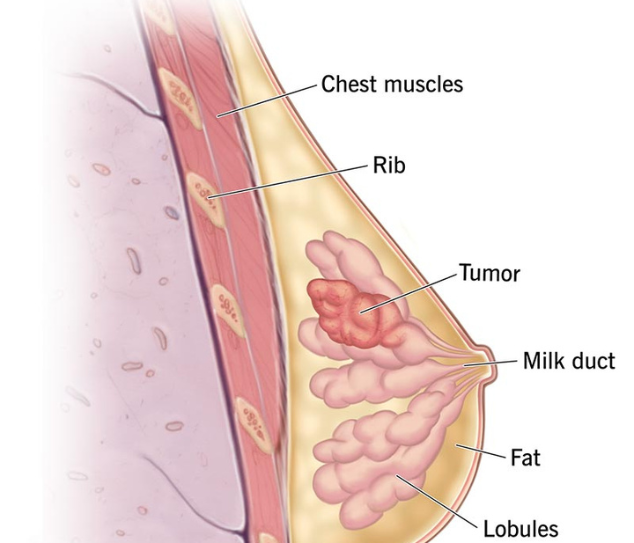
Treatment Options
Treatment depends on the type and stage of the cancer. Doctors may recommend:
- Surgery: To remove tumors or affected breast tissue.
- Radiation & Chemotherapy: To kill cancerous cells.
- Targeted Therapy & Hormone Therapy: To block the growth of specific cancer cells.
Breast Cancer Subtypes
Doctors identify breast cancer subtypes based on the presence or absence of certain receptors (proteins) on the cancer cells. These receptors influence how the cancer behaves and what treatments may work best.
Main Subtypes
- Hormone Receptor-Positive (HR+):
- Cancer cells have receptors for estrogen (ER) and/or progesterone (PR).
- Usually grows more slowly and may respond well to hormone (endocrine) therapy.
- HER2-Positive:
- Cancer cells make too much of a protein called HER2, which promotes cell growth.
- Often more aggressive but can be treated with targeted therapies that block HER2.
- Triple-Negative Breast Cancer (TNBC):
- Lacks estrogen, progesterone, and HER2 receptors.
- Tends to grow and spread faster, and doesn’t respond to hormone therapy or HER2-targeted drugs.
- Typically treated with chemotherapy and newer immunotherapy options.
- Triple-Positive Breast Cancer:
- Has all three receptors (ER, PR, and HER2).
- Offers multiple treatment options, including hormone therapy and HER2-targeted treatments.
Symptoms of Breast Cancer
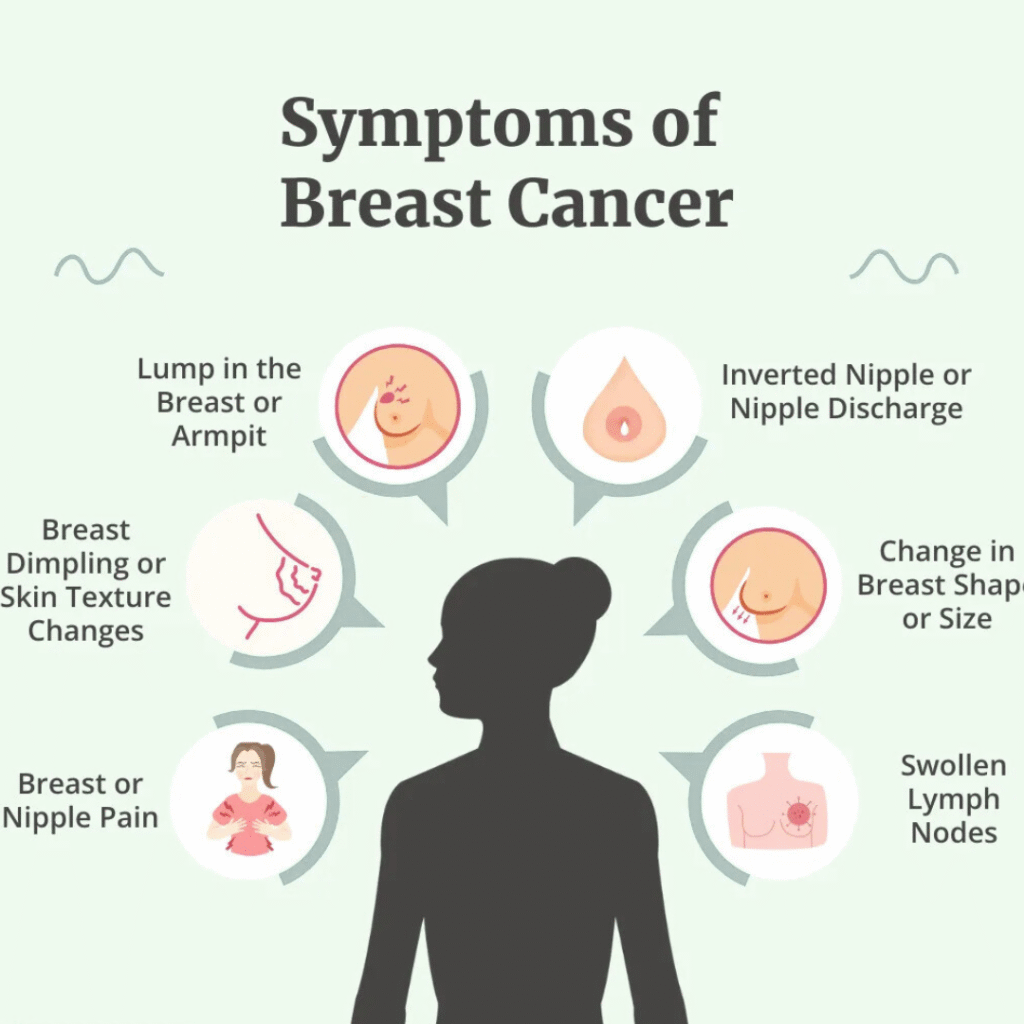
Early breast cancer may not always cause noticeable changes, which is why regular screening is so important. Common symptoms include:
- A lump or thickening in the breast or underarm.
- Change in the size, shape, or appearance of the breast.
- Skin dimpling or puckering (like an orange peel texture).
- Nipple changes – inversion, discharge (other than breast milk), or redness.
- Persistent pain in the breast or nipple area.
- Swelling in part of the breast or underarm.
- Redness, scaling, or irritation of breast skin or nipple.
Causes of Breast Cancer
Breast cancer develops when cells in the breast mutate and grow uncontrollably, forming tumors. The exact cause isn’t always known, but several factors increase the risk:
- Genetics: Inherited mutations like BRCA1 and BRCA2.
- Family history: Having close relatives with breast or ovarian cancer.
- Age: Risk increases, especially after 50.
- Hormonal factors: Early menstruation, late menopause, or hormone replacement therapy.
- Lifestyle factors: Smoking, alcohol, obesity, and lack of physical activity.
- Radiation exposure: Especially to the chest area at a young age.
Diagnosis and Tests for Breast Cancer
Detecting breast cancer early greatly improves treatment success. Doctors use a combination of screening, imaging, and laboratory tests to confirm a diagnosis and determine the stage of the disease.
Common Diagnostic Methods
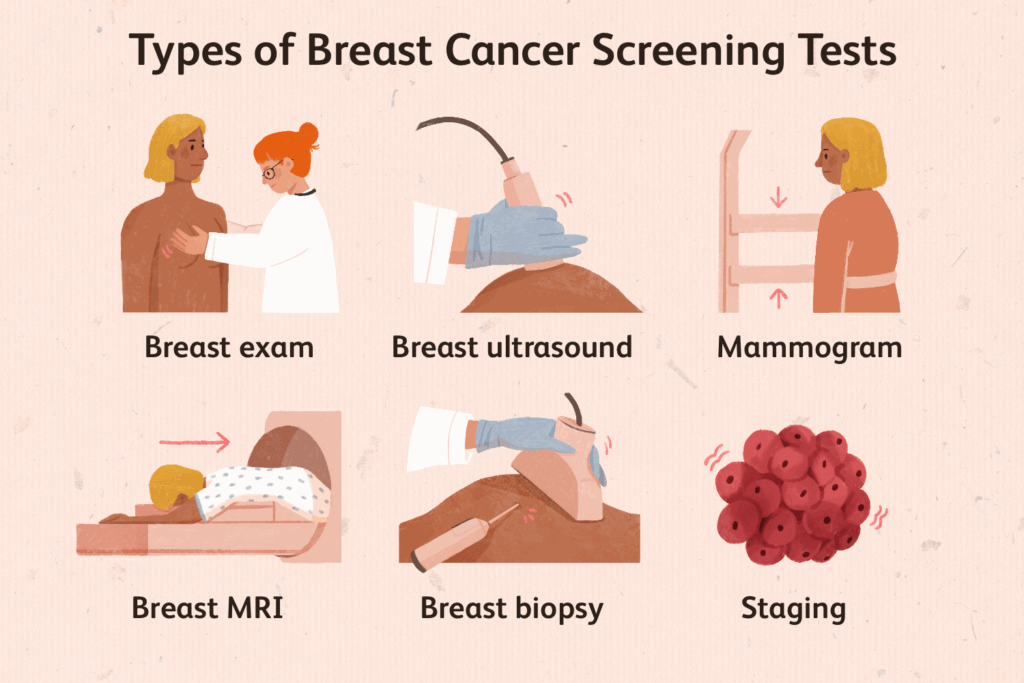
- Clinical Breast Exam (CBE):
A healthcare provider checks for lumps, swelling, or skin/nipple changes. - Mammogram:
An X-ray of the breast used for screening and detecting early signs of cancer. - Ultrasound:
Uses sound waves to distinguish between solid tumors and fluid-filled cysts. - Magnetic Resonance Imaging (MRI):
Provides detailed images, especially useful for women with dense breast tissue or high risk. - Biopsy (Definitive Test):
A small sample of breast tissue is removed and examined under a microscope to confirm cancer and identify the type/subtype.
Additional Tests After Diagnosis
Once breast cancer is confirmed, doctors may run further tests to stage the cancer and guide treatment:
- Hormone receptor tests (ER, PR): To check if the cancer responds to hormone therapy.
- HER2 testing: Determines if targeted therapies will be effective.
- Blood tests & imaging scans (CT, PET, bone scan): To see if the cancer has spread.
Diagnosis and Tests
How is breast cancer diagnosed?
Healthcare providers usually begin with a physical breast examination and may order mammograms to detect any abnormalities. If something suspicious is found, further diagnostic tests are done to confirm breast cancer and understand its characteristics. These may include:
- Breast ultrasound: Uses sound waves to produce images of breast tissue and distinguish between solid masses and fluid-filled cysts.
- Breast magnetic resonance imaging (MRI): Provides detailed images of breast tissue, often used when mammograms or ultrasounds are inconclusive.
- Breast biopsy: A sample of breast tissue is removed and examined under a microscope to confirm if cancer cells are present.
- Immunohistochemistry (IHC) test: Checks breast cancer cells for hormone receptors (estrogen and progesterone) or HER2 protein, which guides treatment decisions.
- Genetic testing: Identifies inherited mutations (such as BRCA1 or BRCA2) that increase the risk of breast cancer and may influence treatment options.
Stages of Breast Cancer
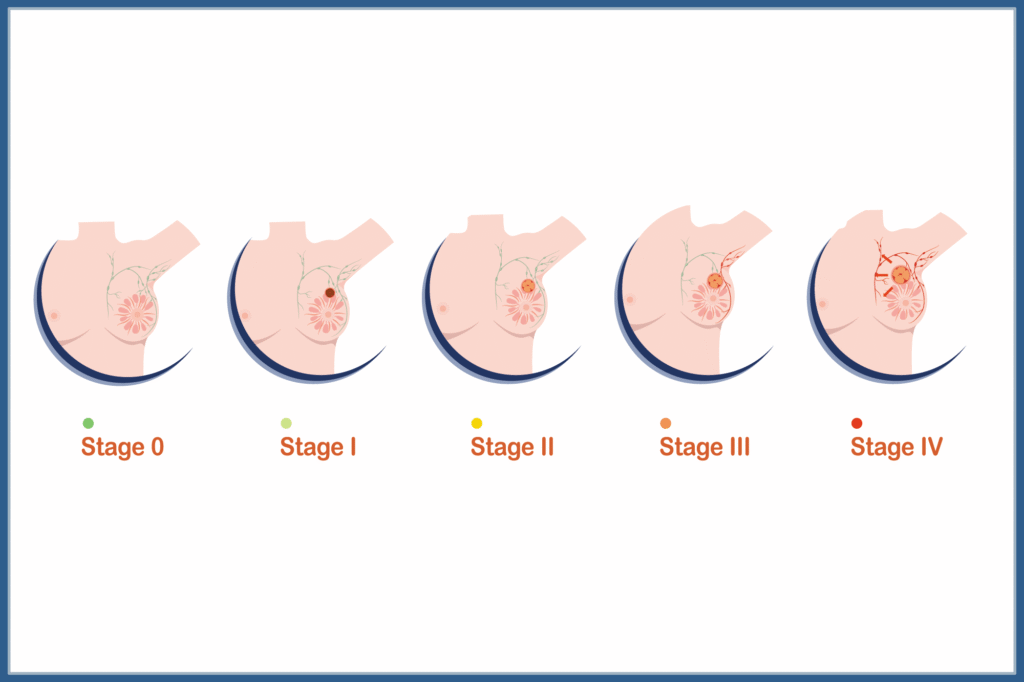
Breast cancer is classified into stages based on the size of the tumor, whether it has spread to lymph nodes, and if it has reached other parts of the body. Staging helps doctors decide the best treatment.
Stage 0 (Carcinoma in situ)
- Abnormal cells are present but confined within the milk ducts or lobules.
- They have not spread into nearby breast tissue.
Stage I
- The cancer is small (up to 2 cm) and either:
- Has not spread outside the breast, or
- Has only spread to a very small number of nearby lymph nodes.
Stage II
- Tumor is larger (2–5 cm) or has spread to a few nearby lymph nodes.
- Cancer is still considered early but more advanced than Stage I.
Stage III (Locally advanced breast cancer)
- Tumor may be larger than 5 cm.
- Cancer has spread to several lymph nodes or tissues near the breast (like the chest wall or skin).
- It has not spread to distant organs.
Stage IV (Metastatic breast cancer)
- Cancer has spread beyond the breast and nearby lymph nodes to other parts of the body, such as the bones, liver, lungs, or brain.
Where Breast Cancer Starts
Breast cancer can develop in different parts of the breast, but most start in one of two areas:
- Ductal carcinoma: Begins in the milk ducts.
- Lobular carcinoma: Begins in the lobules (glands that produce milk).
Non-invasive vs. Invasive
- Non-invasive: The cancer cells remain confined to the ducts or lobules.
- Ductal carcinoma in situ (DCIS) is an early, non-invasive stage often found during routine exams or mammograms.
- Lobular carcinoma in situ (LCIS) is less common and not considered true cancer, but it increases the risk of developing breast cancer later.
- Invasive: Cancer cells have spread beyond the ducts or lobules into surrounding breast tissue or lymph nodes.
- Invasive ductal carcinoma is the most common form.
- Invasive lobular carcinoma is less common but can spread in a similar way.